
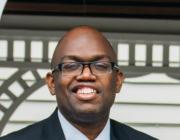
Dominican by birth and New Yorker by upbringing, I tricked myself into writing four junior papers and two senior theses en route to graduating summa cum laude from Princeton in Classics with a WWS certificate (2006; Latin Salutatory). I held the Daniel M. Sachs Class of 1960 Graduating Scholarship to read for the M.Phil. in Greek and Roman History at Oxford (2008) before heading west for a Ph.D. in Classics from Stanford (2014). After a two-year postdoctoral stint at Columbia’s Society of Fellows, I returned to Princeton, where in addition to my appointment in Classics I am affiliated with the Program in Latino Studies.
My core research and teaching focus is the Roman Republic and early Empire. Blending social-scientific techniques with literary and material evidence, Divine Institutions (in progress; PUP) argues that temple construction and pilgrimage networks held the “imperial Republic” together as it expanded across Italy and the Mediterranean. In a happy case of superfetation, several shorter projects are gestating together with the book: articles on the religious world of Rome’s slaves, Roman divination’s play with ecology, and elite families with quirky names are all in various stages of preparation. Two pieces on Varro—for whom I have a particular fondness—will see the light of day soon; and a volume of essays on Roman appropriation that I’m co-editing for CUP (Empire of Plunder) is approaching the finish line. The common thread is an enduring concern with patterns of cultural and intellectual exchange; an interest in new approaches that can better illuminate those patterns; and an ecumenical attitude to the many different sorts of ancient evidence available to us.
Spurred by my interests in religion and ecology, I spend a great deal of time thinking about waste and its handling from antiquity (and as mediated by antiquity) to the present. Scratching the itch of my fascination is taking me on a journey whose final destination is known only to the gods; one stop along the way is a meditation on waste/funk for the Liquid Antiquity project curated by my colleague Brooke Holmes. More straightforwardly summarized is my work on classical reception in contemporary American and Latin American cultures. An essay on the politics of classical reception in Santo Domingo will appear in The Oxford handbook of comparative political theory, and I’m a contributor to a volume now under review at OUP on classical receptions in the Black Atlantic. I’m keeping the classical reception hat on as I dig into a new project on conceptions and practices of citizenship across time.
A staunch believer in the importance of public scholarship, I’ve written for and sit on the editorial board of the journal Eidolon: past articles include an essay on Greco-Roman receptions in hip-hop and a two-parter on immigration that was picked up by Newsweek. In 2015 I published a memoir that explores the intersection of my migratory subjectivity and Dominican identity with my formation as a classicist (Undocumented: Penguin Press); I have since written shorter pieces for The Guardian, Matter, and Vox. This writing is motivated by a sense of responsibility to the pursuit of humanistic learning for social justice, and by the strong conviction that classics and classicists should be allies and champions for black and brown folk.
TEACHING INTERESTS
In fall 2016-17 I will offer the Roman Republic undergraduate survey and co-teach (with Denis Feeney) a graduate seminar on the Middle Republic. In the spring I will launch a new course, “Citizenships: ancient and modern,” designed to push me—and students who enroll—well beyond our comfort zones.
Prior to returning to Princeton, I taught in Columbia’s Justice-in-Education Initiative for currently and formerly incarcerated adults and its Freedom and Citizenship Seminar for high schoolers; I look forward to connecting with projects now under way at Old Nassau that promote greater access to educational opportunity.